Cloud computing has revolutionized how businesses operate, and when it comes to scalable, secure, and intelligent infrastructure, few combinations are as impactful as ‘and azure’. This powerful synergy drives innovation, enhances efficiency, and unlocks new possibilities across industries.


Understanding the Core of ‘and azure’ in Modern Cloud Ecosystems

The phrase ‘and azure’ may seem ambiguous at first glance, but in the context of digital transformation, it often refers to the integration of Microsoft Azure with other technologies, platforms, or business strategies. Whether it’s AI and Azure, IoT and Azure, or DevOps and Azure, the conjunction ‘and’ signifies a strategic pairing that amplifies capabilities.
What Does ‘and azure’ Actually Mean?
The term ‘and azure’ is not just a grammatical construct—it’s a conceptual framework used in tech discussions to denote integration. For example, ‘AI and Azure’ implies leveraging Azure’s cloud infrastructure to deploy, manage, and scale artificial intelligence solutions. This pattern repeats across domains: analytics and Azure, security and Azure, hybrid cloud and Azure.
- The ‘and’ symbolizes integration between Azure and complementary technologies.
- It reflects real-world use cases where Azure acts as the backbone for innovation.
- Search trends show rising queries like ‘Kubernetes and Azure’ or ‘Power BI and Azure’, indicating demand for integrated knowledge.
“Azure isn’t just a cloud platform—it’s a catalyst for convergence. When we say ‘and Azure’, we’re talking about synergy.” — Microsoft Cloud Architect, 2023
Why Integration Matters in Cloud Computing
In today’s complex IT environments, siloed systems hinder agility. The power of ‘and azure’ lies in its ability to connect disparate tools into a unified ecosystem. Azure provides APIs, SDKs, and managed services that make integration seamless.
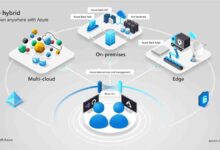
For instance, combining Azure Arc with on-premises infrastructure allows organizations to manage hybrid environments from a single pane of glass. This integration reduces operational overhead and improves governance.
- Integrated systems reduce latency and data duplication.
- They enable centralized monitoring and security policies.
- Automation becomes more effective when tools work together via Azure.
AI and Azure: Unlocking Intelligent Automation
One of the most transformative pairings in modern tech is AI and Azure. Microsoft has positioned Azure as a leader in AI infrastructure, offering tools that democratize access to machine learning and cognitive services.
Azure Cognitive Services Explained
Azure Cognitive Services are pre-built AI models that developers can integrate into applications without deep expertise in data science. These include vision, speech, language, and decision-making APIs.
For example, the Computer Vision API can analyze images to detect objects, read text (OCR), or identify adult content. Similarly, the Text Analytics API can extract sentiment, key phrases, and entities from unstructured text.
- Face API: Detects and recognizes human faces in photos.
- Speech to Text: Converts spoken audio into written text in real time.
- Translator Text: Provides multi-language translation with context awareness.
“With Cognitive Services and Azure, even small teams can build AI-powered apps in days, not months.” — AI Developer, TechCrunch 2024
Building Custom Machine Learning Models with Azure ML
While Cognitive Services offer ready-to-use AI, Azure Machine Learning (Azure ML) enables organizations to build, train, and deploy custom models at scale.
Azure ML Studio provides a drag-and-drop interface for designing ML workflows, while also supporting code-based development in Python and R. It integrates with popular frameworks like TensorFlow, PyTorch, and scikit-learn.
- Automated ML (AutoML) helps users find the best model for their dataset automatically.
- Model interpretability tools help explain predictions, crucial for compliance in regulated industries.
- ML pipelines allow reproducible workflows for continuous training and deployment.
Organizations use Azure ML for predictive maintenance, customer churn analysis, fraud detection, and personalized recommendations. The combination of AI and Azure reduces time-to-market and increases model accuracy through scalable compute resources.
IoT and Azure: Connecting the Physical and Digital Worlds
The Internet of Things (IoT) generates massive volumes of data from sensors and devices. Azure provides a robust platform to ingest, process, and act on this data in real time.
Azure IoT Hub: The Central Nervous System
Azure IoT Hub is a managed service that acts as a central message hub for bi-directional communication between IoT devices and the cloud.
It supports millions of devices, handles secure authentication, and enables device-to-cloud telemetry ingestion as well as cloud-to-device command sending. IoT Hub integrates with other Azure services like Stream Analytics, Functions, and Event Grid for end-to-end solutions.
- Device Provisioning Service (DPS) automates secure onboarding of devices at scale.
- Device twins store metadata and synchronize state between cloud and device.
- Message routing directs telemetry to different endpoints like Blob Storage or Service Bus.
“Azure IoT Hub gave us the scalability we needed to connect 50,000+ sensors across our supply chain.” — CTO, Logistics Company
Real-Time Data Processing with Azure Stream Analytics
Raw IoT data is only valuable when analyzed in context and in real time. Azure Stream Analytics enables SQL-like queries on streaming data from IoT Hub, Event Hubs, or Blob Storage.
For example, a manufacturing plant can monitor vibration sensors on machinery and trigger alerts when anomalies exceed thresholds. Stream Analytics can filter, aggregate, and enrich data before sending it to dashboards or triggering Azure Functions.
- Supports windowing functions (tumbling, sliding, hopping) for time-based analysis.
- Integrates with Power BI for live dashboards.
- Can output to multiple sinks including databases, storage, and notification systems.
When combined with machine learning models deployed via Azure ML, Stream Analytics can perform predictive analytics on the fly—such as forecasting equipment failure before it happens.
DevOps and Azure: Accelerating Software Delivery
Modern software development relies on continuous integration and continuous delivery (CI/CD). DevOps and Azure together provide a comprehensive suite of tools to automate the software lifecycle.
Azure DevOps Services Overview
Azure DevOps is a set of collaborative services that include project management, source control, CI/CD pipelines, testing, and artifact management.
Teams use Azure Repos for Git-based version control, Azure Boards for agile planning (Kanban, Scrum), and Azure Pipelines for building and deploying applications across platforms—whether it’s .NET apps to Azure App Service or containerized microservices to AKS.
- YAML-based pipelines offer version-controlled, reusable CI/CD configurations.
- Multi-stage pipelines support deployment across dev, staging, and production environments.
- Integration with GitHub, Jenkins, and third-party tools ensures flexibility.
“We reduced deployment time from 4 hours to 15 minutes using Azure Pipelines.” — DevOps Engineer, FinTech Startup
Infrastructure as Code with Azure Bicep and ARM
Managing cloud infrastructure manually is error-prone and inefficient. Infrastructure as Code (IaC) allows teams to define and deploy Azure resources using declarative templates.
Azure Resource Manager (ARM) templates have long been the standard, but Microsoft now promotes Bicep, a simpler, domain-specific language for deploying Azure resources.
- Bicep files are easier to read and maintain than JSON-based ARM templates.
- They support modularity, parameters, and type safety.
- Bicep compiles to ARM JSON, ensuring compatibility with existing tooling.
By combining Bicep with Azure DevOps pipelines, teams can automate environment provisioning—ensuring consistency across regions and reducing configuration drift.
Security and Azure: Building Trust in the Cloud
As organizations migrate to the cloud, security becomes a top concern. Security and Azure go hand in hand, with Microsoft investing heavily in compliance, identity management, and threat protection.
Azure Active Directory: Identity at the Core
Azure Active Directory (Azure AD) is Microsoft’s cloud-based identity and access management service. It serves as the foundation for securing access to Azure resources and SaaS applications.
Azure AD supports Single Sign-On (SSO), Multi-Factor Authentication (MFA), Conditional Access policies, and Identity Protection for detecting risky sign-ins.
- Conditional Access allows admins to enforce rules like ‘block access from untrusted locations’.
- Privileged Identity Management (PIM) enables just-in-time administrative access.
- Integration with on-premises Active Directory via Azure AD Connect ensures hybrid identity continuity.
“Over 90% of Fortune 500 companies use Azure AD for identity management.” — Microsoft, 2023 Report
Microsoft Defender for Cloud: Unified Security Management
Microsoft Defender for Cloud provides unified security posture management and advanced threat protection across hybrid cloud workloads.
It continuously assesses your environment against security best practices, assigns a secure score, and recommends remediation steps. It also detects threats using AI-driven analytics and integrates with Microsoft Sentinel for SIEM capabilities.
- Defender for Servers protects VMs and workloads with behavioral monitoring.
- Defender for Containers secures Kubernetes clusters and container registries.
- Defender for SQL monitors database activities for suspicious behavior.
With ‘security and azure’, organizations gain a proactive defense strategy rather than reactive patching.
Hybrid Cloud and Azure: Bridging On-Premises and Cloud
Not all workloads can move to the public cloud immediately. Hybrid cloud and Azure offer a balanced approach, allowing businesses to retain on-premises systems while leveraging cloud scalability.
Azure Stack: Extend Azure to Your Datacenter
Azure Stack is a family of products that brings Azure services into on-premises environments. Azure Stack Hub allows full deployment of Azure services in private data centers, while Azure Stack HCI focuses on hyper-converged infrastructure for virtualized workloads.
This is ideal for industries with strict data residency requirements, such as government, healthcare, and finance.
- Consistent APIs and tooling between Azure and Azure Stack simplify management.
- Supports Kubernetes, VMs, and serverless functions on-premises.
- Integrated billing and usage reporting via Azure Portal.
“Azure Stack allowed us to run cloud-native apps locally while maintaining regulatory compliance.” — Government IT Director
Azure Arc: Manage Any Infrastructure as Azure
Azure Arc takes hybrid cloud a step further by enabling management of non-Azure resources—such as AWS EC2, Google Cloud VMs, or on-premises servers—as if they were native Azure resources.
With Azure Arc, you can apply Azure policies, deploy extensions, monitor performance, and run Azure services anywhere.
- Arc-enabled Kubernetes allows consistent governance across clusters.
- Arc-enabled servers extend Azure management to any machine with internet access.
- Supports GitOps workflows for declarative configuration management.
The ‘hybrid cloud and azure’ model empowers organizations to modernize incrementally without vendor lock-in or disruptive migrations.
Data Analytics and Azure: Turning Insights into Action
Data is the new oil, but only if refined properly. Data analytics and Azure provide a comprehensive suite of tools to collect, store, process, and visualize data at scale.
Azure Synapse Analytics: Unified Analytics Platform
Azure Synapse Analytics is an integrated analytics service that combines big data and data warehousing. It allows organizations to query data using serverless SQL, Apache Spark, or dedicated SQL pools.
Synapse Studio provides a unified interface for data integration, ETL pipelines, and visualization.
- Serverless SQL pools let you query data directly from Azure Data Lake without provisioning infrastructure.
- Spark pools enable large-scale data transformation and machine learning.
- Integrated Power BI connectivity enables real-time dashboards.
“We reduced ETL processing time from 8 hours to 12 minutes using Synapse Spark.” — Data Engineer, Retail Chain
Azure Data Factory: Orchestrate Data Workflows
Azure Data Factory is a cloud-based data integration service that automates the movement and transformation of data across on-premises and cloud sources.
It supports over 100 connectors, including Salesforce, Oracle, Amazon S3, and Azure services. Data pipelines can be scheduled, monitored, and debugged through a visual interface or code.
- Mapping Data Flows provide a no-code way to transform data using a visual designer.
- Integration Runtimes enable secure connectivity to private networks.
- Supports CI/CD through Azure DevOps for pipeline versioning.
When combined with ‘data analytics and azure’, businesses can build end-to-end data pipelines that drive decision-making across departments.
What does ‘and azure’ mean in technology contexts?
The phrase ‘and azure’ typically refers to the integration of Microsoft Azure with other technologies, such as AI, IoT, DevOps, or security. It highlights how Azure serves as a foundational platform that enhances and connects various digital capabilities.
How can AI and Azure improve business operations?
AI and Azure enable businesses to automate processes, gain insights from data, and enhance customer experiences. With tools like Azure Cognitive Services and Azure Machine Learning, organizations can deploy AI models quickly and scale them efficiently.
Is Azure suitable for hybrid cloud environments?
Yes, Azure excels in hybrid scenarios through services like Azure Arc and Azure Stack. These allow organizations to manage on-premises, edge, and multi-cloud resources using Azure’s consistent management plane and security model.
What are the key security features of Azure?
Azure offers robust security through Azure Active Directory for identity management, Microsoft Defender for Cloud for threat protection, and compliance with global standards like GDPR, HIPAA, and ISO 27001. Its shared responsibility model ensures both Microsoft and customers play a role in securing the environment.
How does Azure support DevOps practices?
Azure supports DevOps through Azure DevOps Services, which includes tools for CI/CD, source control, project management, and infrastructure as code. Integration with GitHub, Kubernetes, and monitoring tools enables end-to-end automation and collaboration.
In conclusion, the concept of ‘and azure’ represents more than just a grammatical conjunction—it symbolizes the powerful integration of Microsoft Azure with diverse technologies to drive innovation. From AI and IoT to DevOps and hybrid cloud, Azure acts as a unifying platform that enhances scalability, security, and efficiency. By leveraging these synergies, organizations can accelerate digital transformation, reduce operational complexity, and stay competitive in a rapidly evolving landscape. Whether you’re building intelligent apps, securing infrastructure, or analyzing big data, the combination of ‘and azure’ offers a proven path to success.
Further Reading: