Cloud computing has transformed how businesses operate, and MS Azure stands at the forefront of this revolution. With unmatched scalability, security, and integration, MS Azure empowers organizations to innovate faster and smarter in today’s digital era.

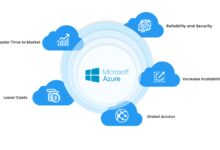


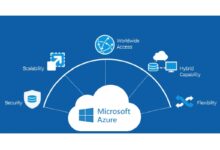
What Is MS Azure and Why It Matters

Microsoft Azure, commonly referred to as MS Azure, is a comprehensive cloud computing platform developed by Microsoft. Launched in 2010, it has rapidly evolved into one of the world’s leading cloud service providers, second only to Amazon Web Services (AWS) in market share. MS Azure offers a vast array of services including computing, analytics, storage, networking, and machine learning—all accessible via a global network of data centers.
What sets MS Azure apart is its seamless integration with Microsoft’s ecosystem, including Windows Server, Active Directory, Office 365, and Dynamics 365. This makes it an ideal choice for enterprises already invested in Microsoft technologies. According to Microsoft’s official site, over 95% of Fortune 500 companies use MS Azure for their cloud infrastructure needs.
Core Components of MS Azure
MS Azure is built on a modular architecture, allowing users to pick and choose services based on their needs. The platform is divided into several key service categories:
- Compute: Virtual machines, containers, serverless functions (Azure Functions), and batch processing.
- Storage: Blob storage, disk storage, file shares, and data lake storage.
- Networking: Virtual networks, load balancers, DNS, and content delivery networks (CDN).
- Databases: Azure SQL Database, Cosmos DB, MySQL, and PostgreSQL.
- AI & Machine Learning: Cognitive Services, Azure Machine Learning, and Bot Services.
Each component is designed to be highly available, scalable, and secure, ensuring that businesses can deploy mission-critical applications with confidence.
Global Infrastructure and Availability
One of the most compelling features of MS Azure is its global reach. As of 2024, Microsoft operates over 60 cloud regions across 140 countries, making it one of the most geographically distributed cloud platforms. This extensive footprint ensures low-latency access and compliance with local data sovereignty laws.
For example, organizations in the European Union can leverage Azure regions in Germany or France to comply with GDPR regulations. Similarly, companies in Asia-Pacific can use data centers in Singapore or Japan for optimal performance. This global presence is a key reason why multinational corporations choose MS Azure over regional competitors.
“Azure is not just a cloud platform; it’s a global innovation engine.” — Satya Nadella, CEO of Microsoft
Key Benefits of Using MS Azure
Organizations adopt MS Azure for a variety of strategic reasons. From cost efficiency to advanced AI capabilities, the platform offers tangible benefits that drive digital transformation. Let’s explore the most impactful advantages.
Cost Efficiency and Pay-as-You-Go Model
Unlike traditional on-premise IT infrastructure, MS Azure operates on a pay-as-you-go pricing model. This means businesses only pay for the resources they consume, eliminating the need for large upfront capital expenditures.
Additionally, Azure offers several cost optimization tools:
- Azure Cost Management: Provides real-time insights into spending and helps identify underutilized resources.
- Reserved Instances: Allows users to commit to one- or three-year terms for significant discounts (up to 72%).
- Hybrid Benefit: Enables organizations to use existing Windows Server and SQL Server licenses on Azure, reducing licensing costs.
According to a Microsoft TCO study, companies can achieve up to 58% lower total cost of ownership compared to on-premise solutions.
Scalability and Elasticity
MS Azure excels in scalability, allowing businesses to scale resources up or down based on demand. Whether handling a sudden spike in web traffic or running large-scale data processing jobs, Azure automatically adjusts compute, storage, and networking resources.
This elasticity is particularly valuable for e-commerce platforms during peak seasons like Black Friday or for media companies streaming live events. With Azure Autoscale, organizations can define rules to automatically add or remove virtual machines based on CPU usage, memory, or queue length.
For example, a retail company using Azure App Services can scale from 10 to 1,000 instances within minutes, ensuring uninterrupted customer experience during high-demand periods.
Security and Compliance
Security is a top priority for MS Azure. The platform offers built-in security features across physical, network, and application layers. Microsoft invests over $1 billion annually in cybersecurity and employs more than 3,500 security experts.
Key security features include:
- Azure Security Center: Provides unified security management and advanced threat protection.
- Azure Active Directory (AAD): Offers identity and access management with multi-factor authentication (MFA).
- Encryption: Data is encrypted at rest and in transit using industry-standard protocols.
- Compliance Certifications: Azure meets over 140 compliance standards, including ISO 27001, HIPAA, SOC 1/2/3, and GDPR.
For regulated industries like healthcare and finance, this level of compliance is critical. A hospital using MS Azure can securely store patient records while meeting HIPAA requirements, reducing the risk of data breaches and regulatory fines.
MS Azure vs. AWS vs. Google Cloud: A Comparative Analysis
When choosing a cloud provider, businesses often compare MS Azure with Amazon Web Services (AWS) and Google Cloud Platform (GCP). While all three offer robust cloud services, MS Azure has distinct advantages in certain areas.
Market Position and Enterprise Adoption
According to Synergy Research Group, as of Q1 2024, AWS holds 32% of the cloud market, followed by MS Azure at 23%, and GCP at 10%. However, Azure leads in enterprise adoption due to its deep integration with Microsoft products.
Many large organizations already use Microsoft Office, Windows, and Active Directory. Migrating to MS Azure allows them to extend their existing IT environment to the cloud with minimal friction. In contrast, AWS, while more mature, often requires more customization for enterprise integration.
A 2023 survey by Flexera found that 68% of enterprises use MS Azure, citing hybrid cloud support and Microsoft ecosystem compatibility as primary reasons.
Hybrid Cloud Capabilities
MS Azure stands out in hybrid cloud scenarios. Azure Stack enables organizations to run Azure services on-premises, creating a consistent environment across cloud and data centers. This is crucial for industries with strict data residency requirements or legacy systems that cannot be moved to the public cloud.
Azure Arc extends this capability by allowing management of servers, Kubernetes clusters, and data services across on-premises, multi-cloud, and edge environments—all from the Azure portal. This unified control plane simplifies operations and reduces administrative overhead.
In comparison, AWS Outposts and Google Anthos offer similar hybrid solutions, but Azure’s integration with Windows Server and System Center gives it an edge for Windows-centric environments.
Innovation in AI and Machine Learning
While Google Cloud leads in AI research, MS Azure offers the most enterprise-ready AI tools. Azure Machine Learning provides a drag-and-drop interface for building, training, and deploying machine learning models without requiring deep coding expertise.
Additionally, Azure Cognitive Services offer pre-built APIs for vision, speech, language, and decision-making. For example, a customer service platform can integrate Azure’s Text Analytics API to automatically detect sentiment in support tickets.
Microsoft’s acquisition of Nuance Communications in 2021 further strengthened its AI capabilities, particularly in healthcare with AI-powered clinical documentation tools.
Core Services Offered by MS Azure
MS Azure provides over 200 services, but several are foundational to most cloud deployments. Understanding these core services is essential for leveraging the platform effectively.
Azure Virtual Machines (VMs)
Azure VMs are the backbone of compute services, allowing users to run Windows or Linux virtual machines in the cloud. They are ideal for applications that require full control over the operating system and configuration.
VMs can be deployed in minutes and scaled based on workload demands. Azure offers a wide range of VM sizes, from general-purpose to memory-optimized and GPU-accelerated instances for AI and graphics workloads.
With Azure Spot VMs, users can run interruptible workloads at up to 90% discount, making it cost-effective for batch processing, testing, and development environments.
Azure Blob Storage
Azure Blob Storage is Microsoft’s object storage solution for unstructured data such as images, videos, logs, and backups. It is highly durable, with data replicated across multiple locations to prevent loss.
Blob Storage supports three tiers:
- Hot: For frequently accessed data.
- Cool: For infrequently accessed data (lower storage cost, higher access cost).
- Archive: For rarely accessed data (lowest storage cost, highest retrieval cost and latency).
This tiering system allows organizations to optimize storage costs based on data usage patterns. For instance, a media company might store recent videos in the hot tier and archive older content in the archive tier.
Azure App Services
Azure App Services is a fully managed platform for building, deploying, and scaling web apps and APIs. It supports multiple programming languages including .NET, Java, Node.js, Python, and PHP.
Developers can deploy applications directly from GitHub, Azure DevOps, or local machines. App Services automatically handles infrastructure management, load balancing, and SSL certificates, allowing teams to focus on code rather than server maintenance.
With deployment slots, organizations can run staging and production environments side-by-side, enabling seamless updates with zero downtime.
How to Get Started with MS Azure
Starting with MS Azure is straightforward, even for those new to cloud computing. Microsoft provides a range of tools and resources to help users onboard quickly and securely.
Creating an Azure Account
To begin, visit Azure’s free tier page and sign up for a free account. The free tier includes:
- 12 months of free services (e.g., VMs, blob storage).
- $200 credit to use in the first 30 days.
- Access to over 55 always-free services.
No credit card is required for the free account, making it risk-free to explore the platform. Once registered, users gain access to the Azure portal—a web-based interface for managing all Azure resources.
Navigating the Azure Portal
The Azure portal is the central hub for managing cloud resources. Its intuitive dashboard allows users to:
- Create and monitor virtual machines, databases, and networks.
- View usage and billing information.
- Set up alerts and automation rules.
- Access documentation and support.
New users can take advantage of the “Tour” feature to get a guided walkthrough of key functionalities. The portal also supports role-based access control (RBAC), enabling administrators to assign permissions based on job roles.
Using Azure CLI and PowerShell
For automation and scripting, Azure provides command-line tools:
- Azure CLI: A cross-platform tool available for Windows, macOS, and Linux.
- Azure PowerShell: A module for Windows PowerShell and PowerShell Core.
These tools allow DevOps teams to automate repetitive tasks such as provisioning VMs, scaling applications, and managing backups. For example, a single CLI command can deploy a complete web application stack with a VM, database, and load balancer.
“Automation is the key to cloud efficiency. Azure CLI makes it simple.” — Microsoft Azure Documentation
Advanced Features and Emerging Technologies in MS Azure
MS Azure is not just about infrastructure—it’s a platform for innovation. Microsoft continuously introduces cutting-edge technologies that empower businesses to stay ahead of the curve.
Azure Kubernetes Service (AKS)
AKS is a managed Kubernetes service that simplifies container orchestration. It handles critical tasks like scaling, patching, and monitoring, allowing developers to focus on application logic.
AKS integrates seamlessly with other Azure services such as Azure Monitor, Azure DevOps, and Azure Active Directory. It also supports hybrid deployments via Azure Arc, enabling consistent Kubernetes management across environments.
For microservices-based applications, AKS provides high availability and resilience. A fintech company, for example, can deploy dozens of microservices on AKS, each independently scalable and upgradable.
Azure AI and Cognitive Services
MS Azure offers a comprehensive suite of AI tools. Azure Cognitive Services include APIs for:
- Computer Vision: Analyze images, detect objects, and read text.
- Speech Services: Convert speech to text and vice versa, with real-time translation.
- Language Understanding (LUIS): Build natural language models for chatbots and voice assistants.
- Decision Services: Implement anomaly detection and content moderation.
These services are pre-trained and can be customized with minimal data. A customer support portal can use Speech-to-Text and Language Understanding to automate call center interactions, reducing response time and operational costs.
Internet of Things (IoT) with Azure IoT Hub
Azure IoT Hub is a managed service that connects, monitors, and manages billions of IoT devices. It supports secure communication between devices and the cloud using MQTT, AMQP, and HTTPS protocols.
With Azure IoT Edge, organizations can run AI models and data processing directly on devices, reducing latency and bandwidth usage. For example, a manufacturing plant can use IoT Edge to detect equipment failures in real time using predictive analytics.
Azure Digital Twins takes IoT further by creating digital models of physical environments. A smart building can simulate energy usage, optimize HVAC systems, and improve occupant comfort—all in a virtual replica.
Real-World Use Cases of MS Azure
MS Azure is not just theoretical—it’s powering real-world solutions across industries. From healthcare to entertainment, organizations are leveraging Azure to solve complex challenges.
Healthcare: AI-Powered Diagnostics
Mayo Clinic partnered with Microsoft to use Azure AI for medical imaging analysis. By training machine learning models on thousands of radiology scans, Azure helps radiologists detect tumors and anomalies faster and with higher accuracy.
The system runs on Azure’s high-performance computing clusters and complies with HIPAA, ensuring patient data privacy. This integration has reduced diagnosis time by up to 40% in pilot programs.
Retail: Personalized Customer Experiences
Walmart uses MS Azure to power its e-commerce platform. Azure handles millions of transactions daily, scales during peak shopping seasons, and delivers personalized product recommendations using Azure Machine Learning.
By analyzing customer behavior in real time, Walmart increases conversion rates and improves customer satisfaction. Azure’s global CDN ensures fast page loads for users worldwide.
Manufacturing: Predictive Maintenance
Siemens leverages Azure IoT Hub and Azure Machine Learning to predict equipment failures in industrial machinery. Sensors collect vibration, temperature, and pressure data, which is analyzed in real time on Azure.
This predictive maintenance approach has reduced unplanned downtime by 30% and extended equipment lifespan. The solution is deployed across multiple factories, all managed through a centralized Azure dashboard.
Future of MS Azure: Trends and Predictions
As technology evolves, so does MS Azure. Several trends are shaping the future of the platform, positioning it as a leader in the next wave of digital innovation.
Expansion of Edge Computing
With the rise of 5G and IoT, edge computing is becoming critical. MS Azure is investing heavily in Azure Edge Zones and Azure Stack Edge to bring cloud capabilities closer to data sources.
For example, autonomous vehicles require real-time processing of sensor data. Azure Edge Zones enable low-latency AI inference at the network edge, improving safety and responsiveness.
Growth of Quantum Computing
Microsoft is pioneering quantum computing with Azure Quantum. This cloud-based service allows researchers and developers to experiment with quantum algorithms using hardware from partners like IonQ and Quantinuum.
While still in early stages, quantum computing has the potential to revolutionize fields like cryptography, drug discovery, and financial modeling. Azure provides a sandbox for innovation, making quantum accessible to a broader audience.
Sustainability and Green Cloud Initiatives
Microsoft has committed to being carbon negative by 2030 and removing all historical emissions by 2050. MS Azure plays a key role in this mission through energy-efficient data centers powered by renewable energy.
Azure’s sustainability calculator helps customers measure the carbon footprint of their cloud usage and identify greener alternatives. As ESG (Environmental, Social, and Governance) becomes a business priority, Azure’s green credentials enhance its appeal.
What is MS Azure?
MS Azure is Microsoft’s cloud computing platform that provides over 200 services for computing, storage, networking, databases, AI, and IoT. It enables businesses to build, deploy, and manage applications in the cloud with high scalability and security.
How does MS Azure compare to AWS?
While AWS is larger in market share, MS Azure excels in enterprise integration, hybrid cloud support, and Microsoft ecosystem compatibility. Azure is often preferred by organizations already using Windows, Office, and Active Directory.
Is MS Azure free to use?
MS Azure offers a free tier with $200 credit for 30 days and access to over 55 always-free services. After the trial, users pay only for what they use, making it cost-effective for startups and enterprises alike.
Can I run Linux on MS Azure?
Yes, MS Azure fully supports Linux distributions including Ubuntu, CentOS, Red Hat, and SUSE. You can deploy Linux virtual machines, containers, and applications just as easily as Windows-based ones.
What industries benefit most from MS Azure?
Industries such as healthcare, finance, retail, manufacturing, and government benefit significantly from MS Azure due to its compliance, security, AI, and IoT capabilities.
MS Azure has established itself as a powerful, flexible, and secure cloud platform that meets the needs of modern businesses. From startups to Fortune 500 companies, organizations leverage its global infrastructure, cost efficiency, and advanced technologies to drive innovation. Whether you’re building a simple website or a complex AI-driven system, MS Azure provides the tools and scalability to succeed. As cloud computing continues to evolve, MS Azure remains at the forefront, shaping the future of digital transformation.
Further Reading: