Cloud computing isn’t just a trend—it’s the backbone of modern digital transformation. At the forefront of this revolution stands msft azure, Microsoft’s powerful cloud platform that’s reshaping how businesses operate, scale, and innovate. Whether you’re a startup or a global enterprise, understanding msft azure is no longer optional—it’s essential.


What Is msft azure and Why It Dominates the Cloud Market

Microsoft Azure, commonly referred to as msft azure, is a comprehensive cloud computing platform launched by Microsoft in 2010. It offers over 200 services, including computing, analytics, storage, networking, and machine learning, all delivered through a global network of data centers. Unlike traditional on-premise infrastructure, msft azure enables organizations to deploy applications faster, scale dynamically, and reduce operational costs.
According to Microsoft’s official site, msft azure powers over 95% of Fortune 500 companies, making it one of the most trusted cloud platforms in the world. Its hybrid capabilities, seamless integration with existing Microsoft products like Windows Server and Office 365, and strong compliance standards give it a competitive edge over rivals like AWS and Google Cloud.
Core Components of msft azure
The strength of msft azure lies in its modular architecture. Users can pick and choose services based on their needs, creating a tailored cloud environment. The main components include:
- Compute: Virtual machines, containers, serverless functions (Azure Functions), and batch processing.
- Storage: Blob storage for unstructured data, disk storage for VMs, and Azure Data Lake for big data analytics.
- Networking: Virtual networks, load balancers, DNS management, and Azure ExpressRoute for private connections.
- Security & Identity: Azure Active Directory (Azure AD), Key Vault for encryption keys, and Security Center for threat monitoring.
- AI & Machine Learning: Cognitive Services, Azure Machine Learning Studio, and Bot Framework.
Each of these components is designed to work cohesively, allowing developers and IT teams to build end-to-end solutions without worrying about infrastructure bottlenecks.
How msft azure Compares to AWS and Google Cloud
While Amazon Web Services (AWS) was the first to dominate the cloud space, msft azure has rapidly closed the gap. A 2023 report from Synergy Research Group shows that Azure holds approximately 23% of the global cloud infrastructure market, second only to AWS’s 32%. Google Cloud trails with around 11%.
What sets msft azure apart is its hybrid cloud strategy. Many enterprises already use Microsoft products like Active Directory, SQL Server, and Windows Server. Migrating to msft azure allows them to extend their on-premise environments into the cloud with minimal friction. In contrast, AWS often requires more re-architecting of legacy systems.
Additionally, msft azure offers superior integration with Microsoft 365 and Dynamics 365, making it ideal for organizations deeply embedded in the Microsoft ecosystem. For example, Azure AD synchronizes seamlessly with on-premise Active Directory, enabling single sign-on (SSO) across cloud and local applications.
“Azure is not just a cloud platform; it’s an extension of your existing IT infrastructure.” — Satya Nadella, CEO of Microsoft
7 Game-Changing Features of msft azure in 2024
As technology evolves, so does msft azure. In 2024, Microsoft has introduced several groundbreaking features that enhance performance, security, and developer productivity. These aren’t just incremental updates—they’re transformative capabilities that redefine what’s possible in the cloud.
1. Azure Arc: Bridging On-Premise and Cloud Environments
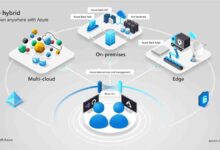
Azure Arc is one of the most powerful innovations in msft azure’s arsenal. It allows organizations to manage resources across on-premise servers, edge devices, and multi-cloud environments (like AWS and GCP) using Azure’s control plane.
This means you can apply Azure policies, monitor performance, deploy Kubernetes clusters, and enforce security standards—regardless of where your infrastructure lives. For instance, a financial institution with strict data residency laws can keep sensitive data on-premise while still benefiting from Azure’s AI and analytics tools.
With Azure Arc, you get a unified management experience. You can use Azure Policy to enforce compliance rules, Azure Monitor for centralized logging, and Azure Security Center for threat detection—all from a single dashboard.
Learn more about Azure Arc at Microsoft’s Azure Arc page.
2. Azure OpenAI Service: Democratizing AI Access
In partnership with OpenAI, Microsoft launched the Azure OpenAI Service, giving enterprises secure, scalable access to cutting-edge language models like GPT-4, Codex, and Embeddings.
Unlike public APIs, the Azure OpenAI Service runs within your virtual network, ensuring data privacy and compliance. This is critical for industries like healthcare and finance, where data leakage is a major concern.
Developers can integrate these models into applications for tasks like customer support chatbots, code generation, content summarization, and sentiment analysis. The service also includes content filtering and responsible AI tools to prevent misuse.
For example, a retail company could use GPT-4 to generate personalized product descriptions at scale, while a software team could leverage Codex to auto-generate boilerplate code, reducing development time by up to 40%.
3. Azure Kubernetes Service (AKS) with Enhanced Security
Kubernetes has become the de facto standard for container orchestration, and Azure Kubernetes Service (AKS) makes it easier than ever to deploy and manage containerized applications.
In 2024, AKS introduced several security enhancements, including:
- Zero-trust node access: Nodes are no longer exposed to the public internet by default.
- Managed identity integration: Eliminates the need for service principal credentials.
- Confidential containers: Encrypts container memory to protect sensitive workloads.
AKS also integrates with GitOps workflows via Flux, enabling continuous deployment from GitHub or Azure DevOps. This allows teams to adopt Infrastructure-as-Code (IaC) practices, improving consistency and reducing human error.
Explore AKS capabilities at Azure Kubernetes Service official page.
How Businesses Leverage msft azure for Digital Transformation
Digital transformation is no longer a buzzword—it’s a survival strategy. Companies that fail to adapt risk obsolescence. msft azure provides the tools needed to modernize legacy systems, improve customer experiences, and drive innovation.
Case Study: BMW Group’s Global Cloud Migration
The BMW Group migrated its entire global IT infrastructure to msft azure to support its digital twin initiative. Using Azure Digital Twins, BMW created virtual replicas of its manufacturing plants, allowing engineers to simulate production processes, optimize workflows, and predict maintenance needs.
This resulted in a 20% reduction in downtime and a 15% increase in production efficiency. By leveraging Azure IoT Hub and Azure Stream Analytics, BMW collects real-time data from over 30,000 sensors across its factories, enabling predictive analytics at scale.
The migration also improved collaboration between teams in Germany, the U.S., and China, thanks to Azure’s global availability and low-latency networking.
Healthcare Innovation with msft azure
In the healthcare sector, msft azure is enabling breakthroughs in patient care and medical research. For example, the UK’s National Health Service (NHS) uses Azure Health Data Services to securely store and analyze electronic health records (EHRs).
By applying Azure Machine Learning to anonymized patient data, researchers can identify disease patterns, predict outbreaks, and accelerate drug discovery. During the pandemic, NHS used Azure to model virus spread and allocate resources more effectively.
Azure’s compliance with HIPAA, GDPR, and other regulations ensures that sensitive health data remains protected. Features like Azure Private Link and Azure Firewall add an extra layer of security, preventing unauthorized access.
“Azure gives us the scalability to handle millions of patient records while maintaining the highest security standards.” — NHS IT Director
Security and Compliance in msft azure
One of the biggest concerns for enterprises moving to the cloud is security. msft azure addresses this with a multi-layered approach that includes physical, network, and application-level protections.
Azure Security Center: Unified Threat Protection
Azure Security Center is a cloud-native security management tool that provides visibility across hybrid environments. It continuously assesses your resources for vulnerabilities and offers actionable recommendations.
For example, if a virtual machine is missing critical patches, Security Center will flag it and suggest remediation steps. It also detects anomalous behavior—like a user logging in from an unusual location—and triggers alerts or automated responses.
The platform uses AI-driven analytics to identify threats before they escalate. In 2023, Microsoft reported that Azure’s threat detection systems blocked over 40 billion malicious emails and 900 million malware attacks monthly.
Compliance and Certifications
msft azure complies with over 140 international and industry-specific standards, including:
- ISO/IEC 27001, 27017, 27018
- GDPR (General Data Protection Regulation)
- HIPAA (Health Insurance Portability and Accountability Act)
- SOC 1, SOC 2, SOC 3
- PCI DSS (Payment Card Industry Data Security Standard)
This makes it easier for organizations to meet regulatory requirements without building compliance from scratch. Azure Policy allows administrators to enforce compliance rules automatically, reducing audit risks.
For a full list of certifications, visit Microsoft’s compliance documentation.
Cost Management and Pricing Models in msft azure
While the cloud offers flexibility, uncontrolled usage can lead to skyrocketing costs. msft azure provides several tools and pricing models to help organizations optimize spending.
Pay-As-You-Go vs. Reserved Instances
The most common pricing model is Pay-As-You-Go, where you pay only for the resources you consume. This is ideal for startups and projects with unpredictable workloads.
For stable, long-term workloads, Reserved Instances offer significant savings—up to 72% compared to pay-as-you-go rates. By committing to one or three years of usage, you lock in a lower price for virtual machines, SQL databases, or Azure Cosmos DB.
Azure also offers Spot VMs for non-critical workloads like batch processing or testing. These VMs can be up to 90% cheaper but may be preempted if capacity is needed elsewhere.
Azure Cost Management + Billing
Azure Cost Management is a powerful tool that provides detailed insights into your spending. You can track costs by resource group, department, or project, set budgets, and receive alerts when thresholds are exceeded.
For example, a marketing team running a campaign on Azure can set a $500 monthly budget. If usage approaches $450, Cost Management sends a notification, allowing the team to adjust or pause resources.
The tool also integrates with Power BI, enabling custom dashboards and advanced reporting. This transparency helps CFOs and IT leaders make informed decisions about cloud investments.
Learn more at Azure Cost Management official site.
Getting Started with msft azure: A Step-by-Step Guide
Starting with msft azure doesn’t have to be overwhelming. Whether you’re a developer, IT admin, or business leader, here’s a clear path to get up and running.
Step 1: Create an Azure Account
Visit Azure Free Account and sign up using your Microsoft account. You’ll get $200 in credits valid for 30 days, plus access to over 55 free services for 12 months (like Azure Functions and Blob Storage).
This free tier is perfect for learning, testing, and small-scale projects. Even after the trial ends, many services remain free at a limited capacity.
Step 2: Navigate the Azure Portal
The Azure Portal (portal.azure.com) is your central hub for managing resources. It features a clean, intuitive interface with a left-hand navigation menu, search bar, and customizable dashboard.
Start by exploring the Marketplace, where you can deploy pre-configured solutions like WordPress, Docker containers, or AI models with just a few clicks.
Use the Resource Groups feature to organize related resources (e.g., a web app and its database) for easier management and billing.
Step 3: Deploy Your First Virtual Machine
To get hands-on experience:
- Click Create a resource in the portal.
- Search for Virtual Machine and select it.
- Choose a region, VM size (e.g., B1s for testing), and authentication method (SSH or password).
- Configure networking and storage options.
- Click Create and wait a few minutes for deployment.
Once deployed, you can connect via SSH or RDP and install applications. This simple exercise gives you a feel for Azure’s ease of use and speed.
Future Trends: What’s Next for msft azure?
The cloud landscape is evolving rapidly, and msft azure is at the forefront of several emerging trends that will shape the next decade of computing.
AI-Driven Cloud Operations (AIOps)
Microsoft is investing heavily in AIOps—using artificial intelligence to automate cloud operations. Azure already uses AI to predict failures, optimize resource allocation, and detect security threats.
In the near future, AI assistants will be able to diagnose performance issues, suggest configuration changes, and even execute fixes autonomously. This will reduce downtime and free up IT teams to focus on strategic initiatives.
Quantum Computing on Azure
Through Azure Quantum, Microsoft is making quantum computing accessible to researchers and developers. While still in its early stages, quantum computing has the potential to solve problems that are impossible for classical computers—like simulating complex molecules for drug discovery.
Azure Quantum provides access to quantum hardware from partners like IonQ and Quantinuum, as well as a software development kit (Q#) for writing quantum algorithms.
Though practical applications are years away, early adopters are already experimenting with quantum-inspired optimization for logistics and financial modeling.
Edge Computing and IoT Expansion
As more devices become connected, processing data at the edge—close to where it’s generated—becomes critical. msft azure supports this through Azure IoT Edge, which allows you to run AI models and custom logic on devices like factory sensors, retail kiosks, and autonomous vehicles.
For example, a wind farm can use Azure IoT Edge to analyze turbine performance in real time and shut down blades if vibrations exceed safe levels—without waiting for cloud communication.
This reduces latency, saves bandwidth, and improves reliability in remote or offline environments.
Discover more at Azure IoT Edge.
What is msft azure?
msft azure is Microsoft’s cloud computing platform that provides a wide range of services including virtual machines, storage, networking, AI, and analytics. It enables businesses to build, deploy, and manage applications across a global network of data centers.
How does msft azure ensure data security?
msft azure uses a defense-in-depth strategy, including encryption at rest and in transit, Azure Active Directory for identity management, Azure Security Center for threat detection, and compliance with over 140 global standards like GDPR and HIPAA.
Can I use msft azure for free?
Yes, Microsoft offers a free account with $200 in credits for 30 days and access to over 55 services for free for 12 months. Some services remain free at a limited capacity even after the trial ends.
Is msft azure better than AWS?
It depends on your needs. msft azure excels in hybrid cloud scenarios and integration with Microsoft products. AWS has a broader service catalog and longer market presence. Many enterprises use both in a multi-cloud strategy.
How do I start learning msft azure?
You can start with the free Azure account, explore the Azure portal, and take free courses on Microsoft Learn. Certifications like AZ-900 (Azure Fundamentals) are excellent for building foundational knowledge.
In conclusion, msft azure is more than just a cloud platform—it’s a complete ecosystem for innovation, security, and scalability. From startups to Fortune 500 companies, organizations worldwide are leveraging its powerful features to drive digital transformation. Whether you’re interested in AI, hybrid cloud, or cost-efficient infrastructure, msft azure offers the tools and support to succeed. As technology continues to evolve, staying ahead means embracing platforms like msft azure that are shaping the future of computing.
Further Reading: